

Short-form video has become a primary format for digital attention across TikTok, Instagram Reels, YouTube Shorts, and LinkedIn. Brands publish constant streams of educational clips, product highlights, and storytelling content to stay visible in fast-moving feeds. At the same time, content production remains one of the most resource-heavy parts of marketing. Platforms such as Prolifik https://getprolifik.com/ address this challenge by turning website content, prompts, and brand context into ready-to-publish short-form videos.
Why Product Pages Have Become Valuable Content Assets
Most companies already have enough material to support an active social media presence. Product pages, landing pages, feature descriptions, and case studies contain structured messaging that can easily be transformed into video content.
Instead of starting from zero for every post, existing website content can act as a continuous source of creative input for short-form video production.
Product Pages as a Content Engine
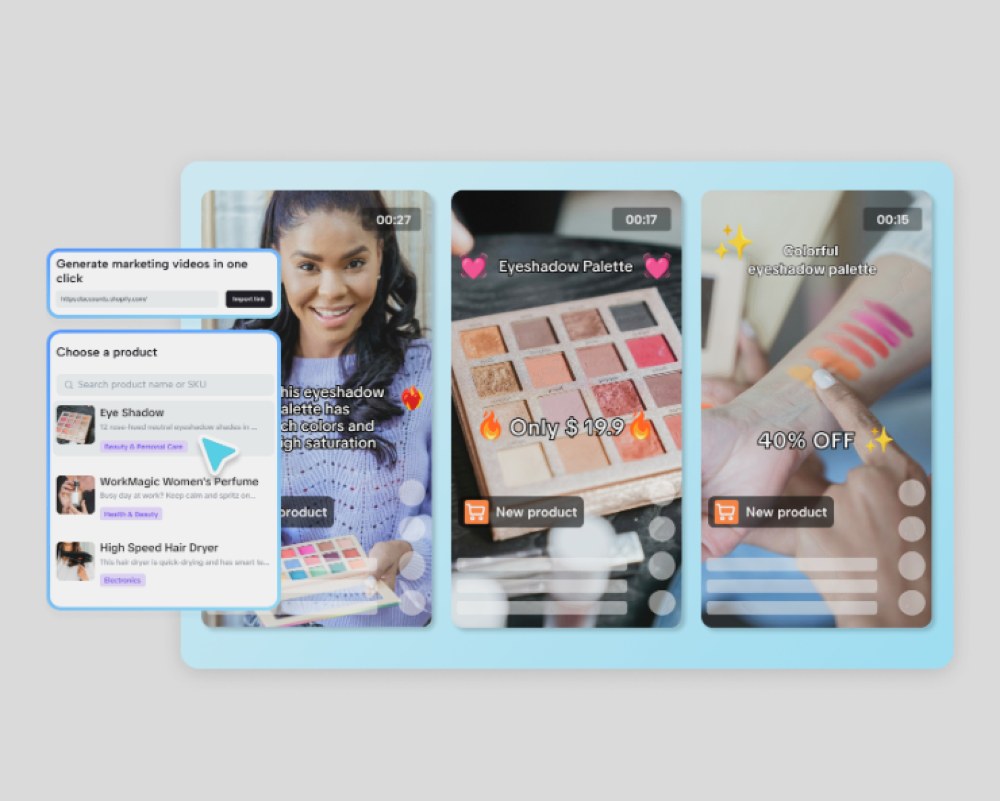
Each product page contains multiple layers of usable information. Feature explanations can become explainer videos, benefits can be reframed as quick hooks, and use cases can be turned into relatable scenarios.
A single page can support multiple content angles, making it significantly more valuable than it appears at first glance.
The Challenge of Manual Repurposing
Despite the availability of content, manual transformation into social media formats remains time-consuming. Teams often need to rewrite messaging, adapt tone for different platforms, and restructure information into short scripts.
As publishing frequency increases, this process becomes difficult to scale without additional resources.
Why Static Websites Limit Content Output
Many websites are built for conversion rather than content distribution. As a result, they lack direct pathways for continuous content generation, even though the underlying information is highly reusable.
This gap creates inefficiencies in modern marketing workflows.
How AI Is Reshaping Content Production
Artificial intelligence is changing how content is created, structured, and distributed. Instead of manually rewriting existing material, AI systems can interpret website content and generate multiple creative directions for short-form video.
This shift reduces production time and increases output volume without sacrificing consistency.
The process typically involves:
- Extracting page context.
- Identifying key messages.
- Generating video concepts.
- Producing multiple variations.
- Preparing platform-ready formats.
These steps significantly reduce friction between idea and publication.

Building a Sustainable Publishing Workflow
A sustainable content system depends on more than generation alone. Review, selection, and scheduling play a critical role in maintaining quality and consistency across platforms.
Content teams increasingly rely on structured pipelines where ideas move from generation to approval and finally into scheduled publishing queues.
From Generation to Review
Large batches of AI-generated video drafts allow teams to compare different hooks, storytelling angles, and visual directions. Instead of relying on a single creative direction, multiple variations can be evaluated quickly.
This improves decision-making and increases the likelihood of identifying high-performing content.
The Role of Content Scheduling
Once approved, videos need to be distributed across multiple platforms. Scheduling systems help maintain consistency by ensuring that content is published at optimal times without manual intervention.
This reduces operational friction and supports long-term content planning.
The path from product page to TikTok reflects a broader shift in content production. Website materials are no longer static assets but active inputs for continuous video generation. AI-powered workflows make it possible to transform structured business information into short-form content at scale, reducing the gap between product knowledge and social media presence. Tools such as Prolifik demonstrate how this transformation can be streamlined into a single workflow, connecting generation, review, and publishing in one system.